
In The Art of War, Sun Tzu wrote, “In the midst of chaos, there is also opportunity.” History has shown this to be true, especially in business. Economic uncertainty, recessions, natural disasters, and even war can feel like existential threats. Yet, for visionary leaders and resilient businesses, those same disruptions can be the catalyst for reinvention, innovation, and growth.
One enduring example of this principle is what was once my family’s business, Spector Furniture & Mattress Gallery, founded more than 130 years ago by my great-grandfather, Simon Spector.
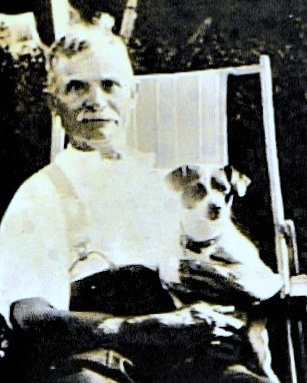
Simon Spector
From Poland to Ansonia: The Start of a Legacy
In 1890, Simon H Spector, my great-grandfather, immigrated to America from Poland and began selling furniture on the streets of Ansonia, Connecticut. He later opened his first storefront, delivering furniture to customers by horse and buggy. The business he started has not only endured but evolved, surviving floods, fires, depressions, and wars to become a cornerstone of the community. Spector Furniture & Mattress Gallery is still in business over 130 years later.
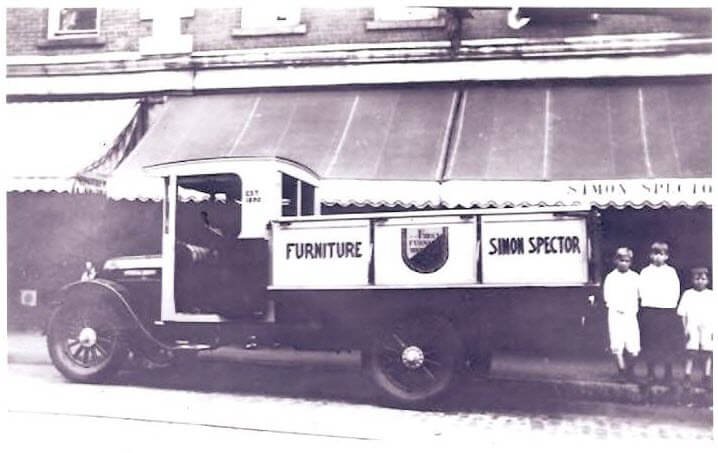
Simon Spector
Simon experienced his share of adversity. According to an article published by the Derby Historical Society in 1908, (https://www.derbyhistorical.org/1908/) Jersey Street* furniture dealer Simon Specter goes to City Hall, and demands that a night’s lodging be given to him because his street’s storm water sewer is clogged and there is 3′-4′ of water on the street. He is offered the lockup, where homeless men are sometimes given lodging, and he refuses and goes home. Cellars are flooded, and the stock of the Specter (sic) furniture warehouse is damaged by the flood. Also in 1908, an article notes, Four men are discovered carrying a safe out of a Jersey Street home at 3 AM by Mrs. Simon Spector. She yells for the police, and the men drop the safe and flee.
Despite these and other setbacks, he continued building the business. Simon’s wife, Fannie, the mother of his twins George and Eva (born Christmas day in 1904), passed away when they were 9 years old, forcing him to send the children to live with his brother Louis and his wife, Pauline. There was a 17-year difference between the oldest Spector children and the twins.
Rising Through Adversity: Simon’s son, George Spector, took over the business when his father, Simon, retired, and led it through some of the most tumultuous periods in modern history: the Great Depression, World Wars I and II, and the catastrophic 1955 Ansonia flood. He met each challenge with practical ingenuity and grit.
During the Depression, George built a chicken coop on the family’s property in Orange, Connecticut, so they could have fresh eggs—and sometimes meat—during hard times.
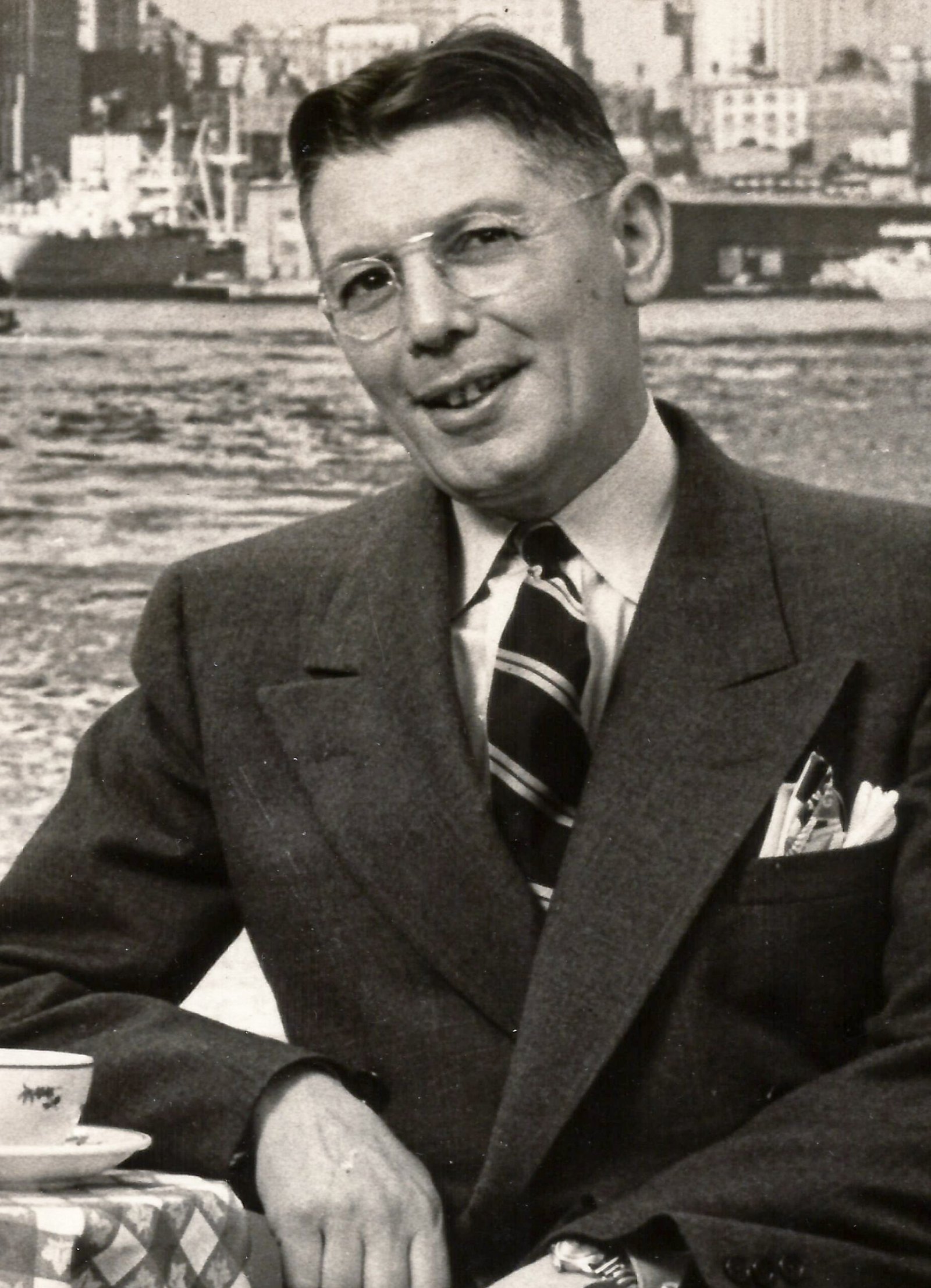
George Spector
My mother remembers collecting those eggs daily, a task made memorable by aggressive pecking chickens she hasn’t quite forgiven. George also knew how to plan for the future. During WWII, anticipating postwar demand, he stockpiled linoleum. That foresight helped boost the store’s recovery after the war. The business even recovered after a devastating fire, caused when teddy bears were hung too close to store lights. Before the fire, the furniture store also sold toys. They relocated to the current location at 385 E. Main Street, where the store continues to operate. During his tenure at the store, the business faced its share of economic uncertainty, such as the Depression of 1929, World Wars I and II, and the Ansonia flood of 1955, yet it has survived and thrived.
Weathering the 1955 Flood.
Perhaps no challenge was greater than the 1955 flood, when 14 inches of rain fell over 36 hours. The entire interior of the store was swept down the street by 6 feet of water. Instead of closing shop, George secured a loan and rebuilt—an act of resilience that defined the spirit of the business.1955 Ansonia, Connecticut Flood.

Outside of Spector Furniture. Photo courtesy of Spector Furniture & Mattress Gallery – Ansonia, Connecticut.
A Family Tradition of Perseverance
For George, resilience wasn’t only about business—it was personal. During family vacations in the South, he would check into hotels using the name “Spencer” to avoid antisemitic discrimination. If he used the name Spector, they would say they were all filled up. My mother remembers growing up during World War II and how, during air raid drills, George took responsibility for checking on neighbors. His sense of duty extended far beyond the store. George’s nephew, Larry Winer, the son of Simon’s daughter, Bella, joined the business with George and worked there for 81 years.
When George retired, the Kreiger family became business partners. David Kreiger became Larry’s partner. David’s sons, Ken and Howard, are the current owners of Spector Furniture & Mattress Gallery. “Respect your customers, offer a good product at a fair price, and back it up with good service.” Quote from the Spector Furniture & Mattress Gallery website.
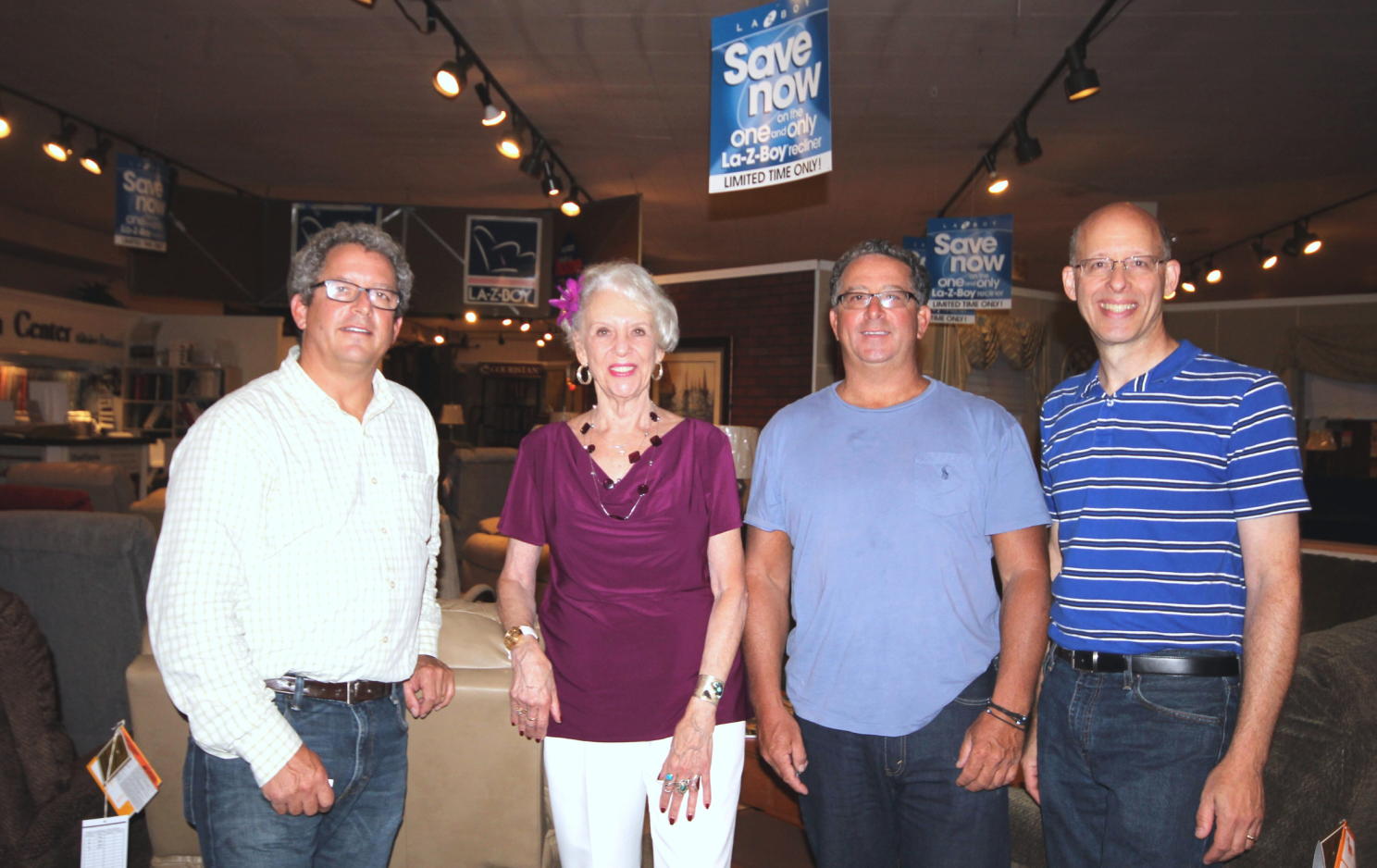
2016 Spector Furniture From Left to right: Howie Kreiger, Sonia Spector (George’s daughter), aka. Sunny Jacobson-Lee, Ken Kreiger, Eric Jacobson (George’s grandson)
A Testament to Resilience
The story of Spector Furniture is not just about furniture—it’s about how to navigate a crisis with foresight, humility, and perseverance. From its beginnings on the streets of Ansonia in 1890 to its current location more than a century later, the business stands as a reminder that chaos does not have to signal defeat. It can be the start of a new chapter. I recently asked Howard how he and Ken have weathered adversity and uncertain economic times. Here’s his answer: “Over the past 43 years, we’ve been able to overcome economic challenges by making quick decisions, where the big box stores may get tied up in red tape. We are also very hands-on. Changes can be implemented (or retracted) immediately vs facing a lag time by filtering down a chain of command. The pandemic and, more recently, tariffs require quick decisions and adjustments in our business model. Personalization and direct customer interaction with the owners lead to better decision making in the long run.”
In times of uncertainty, my family’s history lessons are clear: adapt, plan, and never lose sight of the people and principles that matter most.
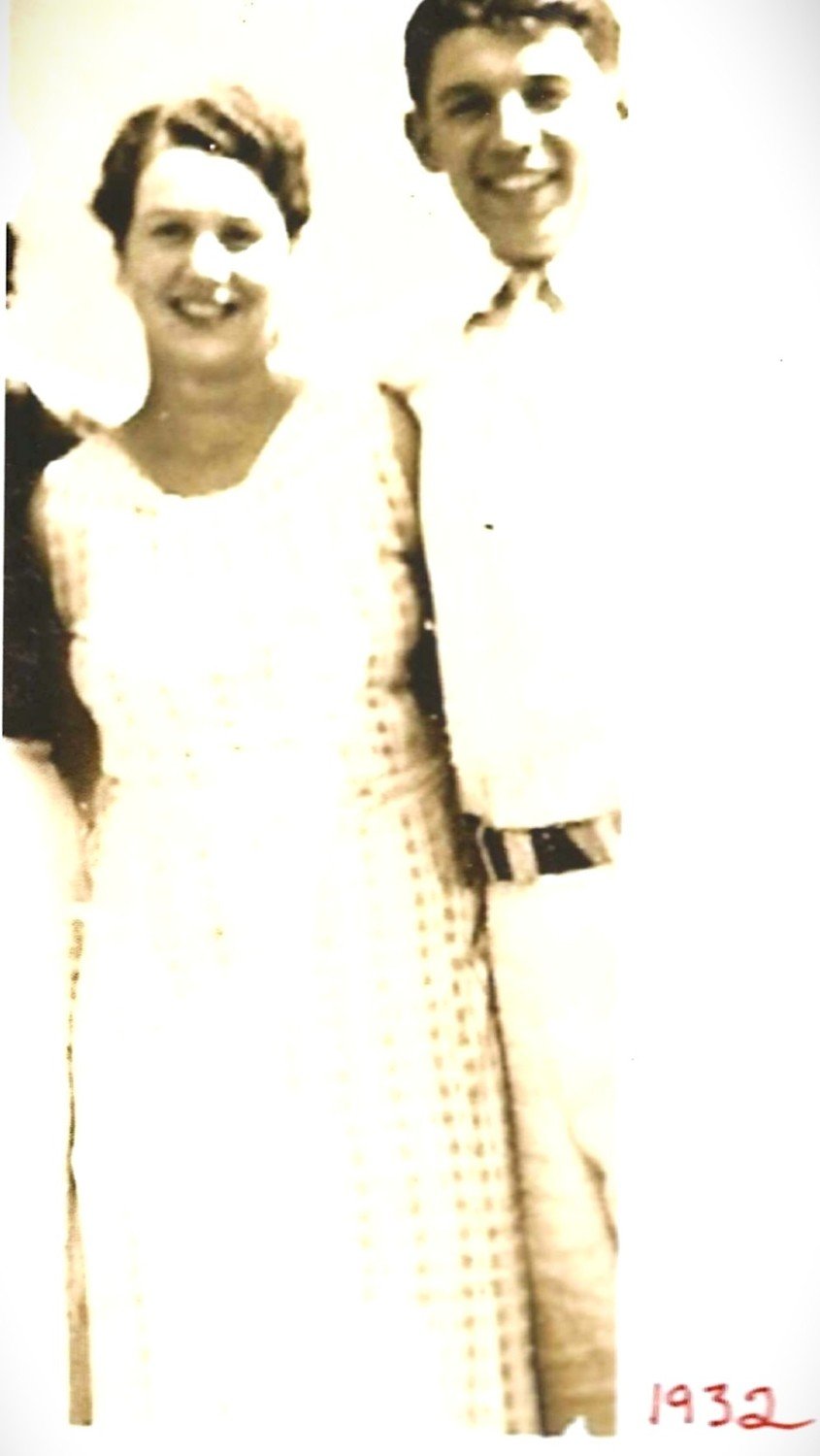
In 1932, George and Ann eloped to Niagara Falls with friends, and both couples got married. They were ahead of their time in business and in their personal lives. When My wife and I received the printed photos back from the lab after our wedding we were surprised to discover visual evidence that my grandmother had helped to decorate our car with streamers, tin cans, and string hanging off the back of our 1970 Plymouth Duster. We shouldn’t have been surprised.